We're reader-supported. We may earn a commission from links on this page, at no cost to you. It never affects our picks. How we stay independent
Best Rollators of 2026
A rollator gives you four wheels, hand brakes, and a built-in seat to rest on, which is why most people graduate to one from a standard walker. The right pick depends on where you use it: a tight, maneuverable frame for indoors, big wheels for sidewalks and grass, or a side-folding design for the car. Here are our scored picks.
By Nate Hansen, Founder, Mobility Reviews·Updated July 2026·How we score
IndependentlyScored
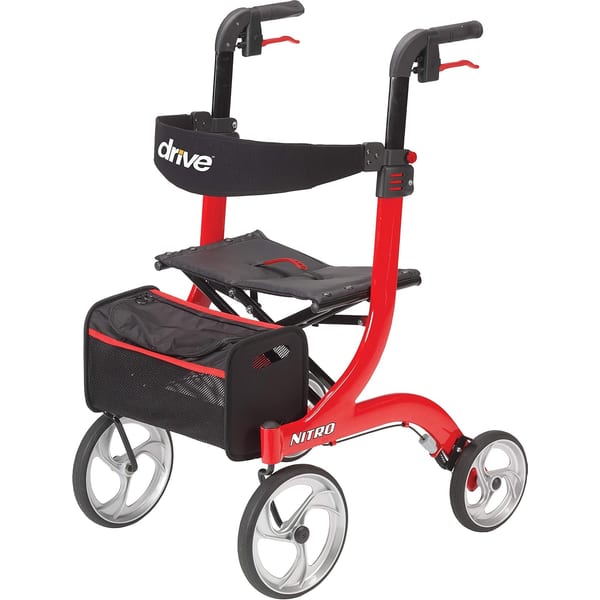
Our top pick is the Drive Medical Nitro Rollator (Fit Score 8.0): the all-around pick.
An editorial score from published specs and owner feedback, not a lab test.
An editorial score from published specs and owner feedback, not a lab test.
Pros
Large 10" wheels roll easily over cracks, thresholds, and outdoors
Cross-fold design collapses narrow and stands on its own for storage
Smooth, sporty steering with a tight indoor turning radius
Cons
Premium price vs. basic rollators
Seat is firm for very long rests
The all-around pick. Big wheels for the outdoors, a frame that turns tightly indoors, and a cross-fold that fits a back seat. It does the most things well of any rollator here. Read our full Drive Medical Nitro Rollator review.
An editorial score from published specs and owner feedback, not a lab test.
Pros
Side-fold collapses very narrow and stands up for tight storage
Comfortable padded seat and backrest for the price
Lighter and easier to load than most full rollators
Cons
8" wheels are less rugged than 10" outdoor wheels
Backrest strap is basic
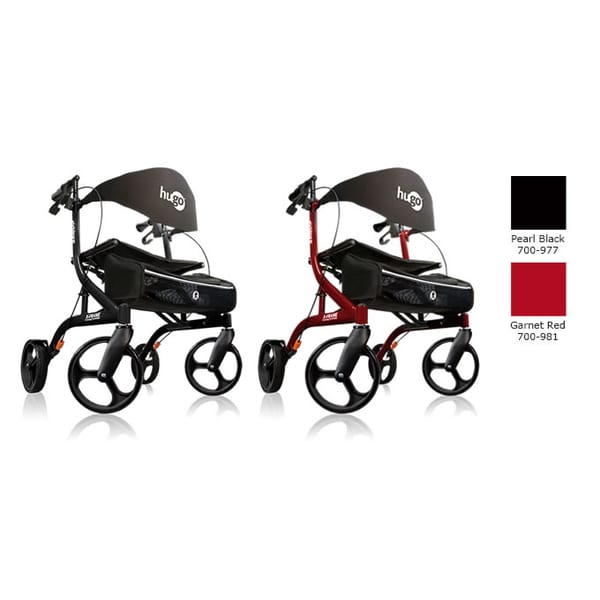
The pick if you are in and out of the car a lot. It side-folds slim, stands on its own, and still gives you a real seat and backrest, all at a fair price. Read our full Hugo Explore Side-Fold Rollator review.
An editorial score from published specs and owner feedback, not a lab test.
Pros
Curved, cushioned seat is one of the comfier ones to rest on
Antimicrobial handles and a large under-seat bag
Stable, reassuring frame for everyday indoor and outdoor use
Cons
Folds flat rather than narrow
Heavier than minimalist travel rollators
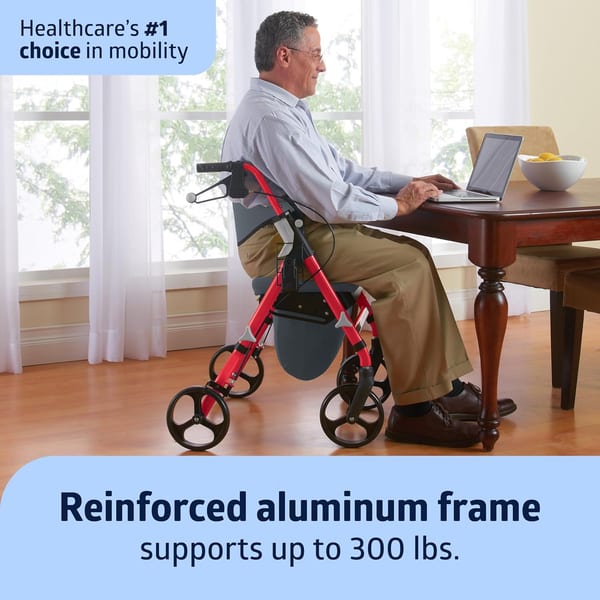
The comfortable everyday choice, and an easy recommendation when buying for a parent. The seat is genuinely nice to sit on and the frame feels stable and confidence-inspiring. Read our full Medline Empower Rollator review.
An editorial score from published specs and owner feedback, not a lab test.
Pros
Most stable option here, the lift-and-step support is rock solid
Inexpensive and works with add-on wheels or glides
Folds very flat and adjusts to a wide height range
Cons
No seat or brakes
Lift-and-step (no wheels) is slower and more tiring
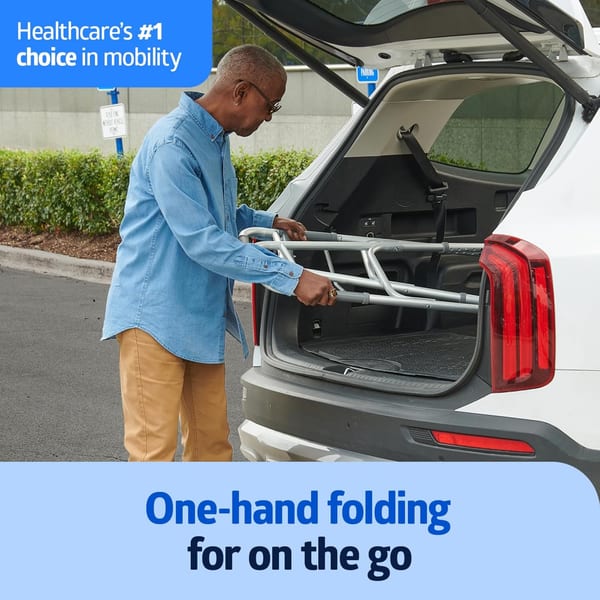
The maximum-stability, lowest-price choice, best right after surgery or when you need the steadiest possible support. Add front wheels or glides to make it roll. Step up to a rollator once you want a seat and to move faster. Read our full Medline Two-Button Folding Walker review.
Specifications
Medline Two-Button Folding Walker specifications
Type
Folding walker (add front wheels/glides)
Support
Maximum stability (lift-and-step)
Folds
Two-button fold, very flat
Adjusts
Push-button height adjustment
Weight capacity
350 lb
How to choose a rollator
Four things that decide whether a rollator actually fits your life.
Wheel size: indoor vs. outdoor
Small wheels (6–7 inches) turn tightly and suit indoor and smooth-floor use. Larger wheels (8–10 inches) roll over thresholds, cracks, gravel, and grass with far less effort. If you spend real time outside, size up.
Seat height and frame width
You want a seat you can sit and stand from without straining, so match the seat height to your leg length, and check the frame width against your hallways and doorways (most are 24–27 inches wide).
Weight and folding
Lighter aluminum frames (under ~18 lb) are easier to lift into a trunk. Side-folding (cross-fold) designs collapse narrow for tight spaces and back seats; standard fold-flat frames are simpler but bulkier.
Brakes and weight capacity
Loop brakes you squeeze to slow and push down to lock (park) are the standard, and they should engage smoothly. Confirm the weight capacity covers you with margin; most rollators support 300 lb, bariatric models more.
Rollators & Walkers: frequently asked questions
What is the best rollator for outdoor use?
Larger 10-inch wheels roll over cracks, thresholds, gravel, and grass with far less effort than 6-8 inch wheels. If you spend real time outside, size up. Our scored picks above note each model’s wheel size.
Rollator vs. walker, which do I need?
A rollator gives you four wheels, hand brakes, and a seat to rest on. A folding walker offers maximum lift-and-step stability but no seat or wheels. Choose a walker for the steadiest support after surgery, and a rollator to move faster and rest along the way.
What is the best lightweight rollator for travel?
Lighter aluminum frames under about 18 lb are easiest to lift into a trunk, and side-folding (cross-fold) designs collapse narrow for tight spaces and back seats. See the portability scores in our ranking above.
How do I choose the right rollator seat height?
Match the seat height to your leg length so you can sit and stand without straining, and check the frame width against your hallways and doorways (most are 24-27 inches wide).
Get our free Everyday Mobility Cheat Sheet
The measurements, weight limits, and fold-and-fit details that make a daily-use aid work, on one page, plus our current top picks. One email, no spam.
 Hugo Explore Side-Fold Rollator
  Medline Empower Rollator
  Medline Two-Button Folding Walker