We're reader-supported. We may earn a commission from links on this page, at no cost to you. It never affects our picks. How we stay independent
Best Knee Scooters of 2026
If you are non-weight-bearing on one foot or ankle, a knee scooter is usually far easier than crutches: you rest the bad leg on a padded platform and roll, hands free to carry things. The picks differ on steering (steerable vs. fixed), wheel size for outdoors, and how compact they fold. Here are our scored picks.
By Nate Hansen, Founder, Mobility Reviews·Updated July 2026·How we score
IndependentlyScored
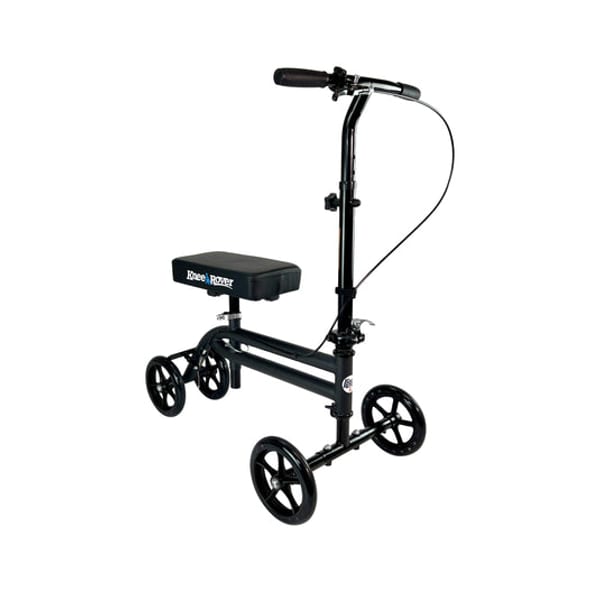
Our top pick is the KneeRover Steerable Knee Scooter (Fit Score 8.2): the best all-around knee scooter for a foot or ankle injury.
An editorial score from published specs and owner feedback, not a lab test.
An editorial score from published specs and owner feedback, not a lab test.
Pros
Steerable front end makes corners and doorways easy
Dual locking rear brakes for parking and transfers
Adjustable knee platform and handlebars fit most heights
Cons
Standard wheels prefer smooth surfaces
Not for hip or thigh injuries
The best all-around knee scooter for a foot or ankle injury. Steerable, stable, and easy to fold for the car, it is the hands-free alternative most people prefer over crutches. Read our full KneeRover Steerable Knee Scooter review.
An editorial score from published specs and owner feedback, not a lab test.
Pros
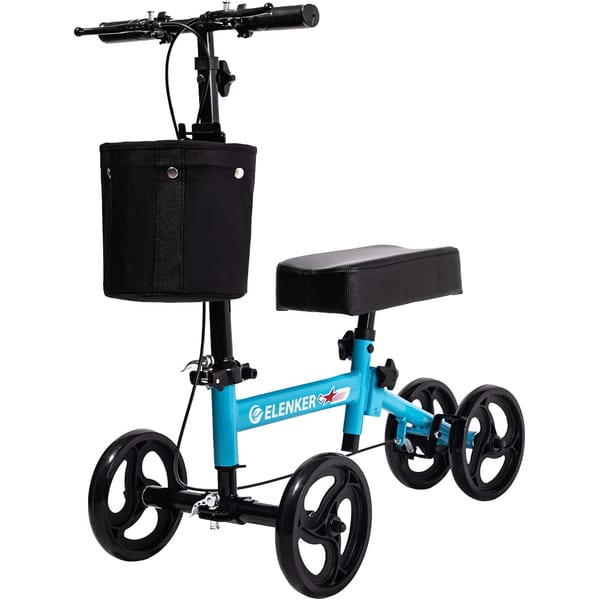
Steerable and well-equipped for a budget price
Comes with a basket and dual braking
Adjustable knee pad and handlebars
Cons
Knee pad is thinner than premium models
Standard wheels are indoor/pavement only
The value knee scooter. It covers the essentials, steerable, adjustable, dual brakes, for noticeably less, which makes sense for a recovery you hope is short. Read our full ELENKER Steerable Knee Walker review.
An editorial score from published specs and owner feedback, not a lab test.
Pros
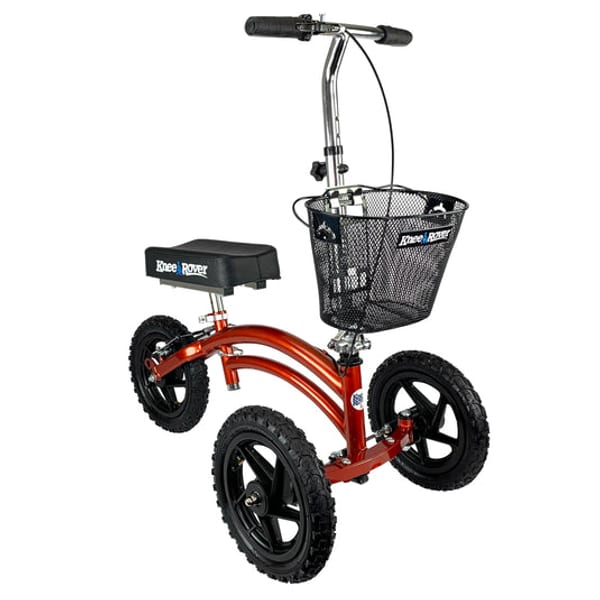
Big 12" air tires roll over grass, gravel, and bumps
Most stable, planted ride of the knee scooters here
Still steerable with locking brakes
Cons
Heavier and bulkier to lift and store
Air tires can need occasional inflation
The pick if your days include grass, gravel, or rough sidewalks. The big pneumatic tires transform outdoor use, at the cost of more weight when you load it in the car. Read our full KneeRover All-Terrain Knee Scooter review.
An editorial score from published specs and owner feedback, not a lab test.
Pros
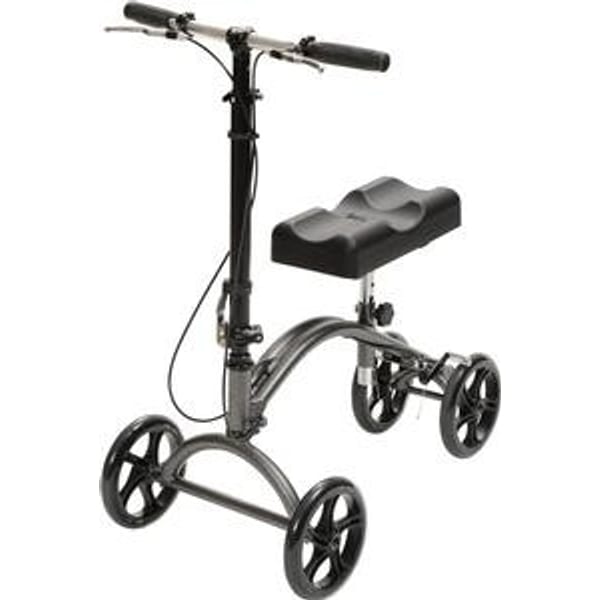
Well-built frame from a trusted medical brand
Comfortable contoured knee pad and easy height adjustments
Removable basket and smooth steering
Cons
Costs a bit more than budget walkers
Indoor/pavement wheels
A polished, dependable knee walker from a name caregivers trust. Comfortable and easy to adjust, it is a safe pick when you want quality without going all-terrain. Read our full Drive Medical DV8 Knee Walker review.
Specifications
Drive Medical DV8 Knee Walker specifications
Steering
Steerable front wheels
Wheels
8" wheels
Knee pad
Adjustable, contoured pad
Extras
Basket; height-adjustable steering
Weight capacity
300 lb
Folds
Yes
How to choose a knee scooter
Four things that decide whether a knee scooter actually fits your life.
Steerable vs. fixed front wheels
Steerable knee scooters (most quality models) turn with the handlebars, which makes corners and doorways much easier. Fixed-wheel scooters cost less but are harder to maneuver in tight spaces.
Wheel size and where you go
Standard 7.5–8 inch wheels are fine indoors and on smooth pavement. All-terrain models with 12 inch pneumatic tires handle grass, gravel, and bumps, worth it if you spend time outdoors.
Knee pad and adjustments
A thick, contoured knee pad and an adjustable knee-platform height (and handlebar height) are what make a knee scooter comfortable over weeks. Check the height range fits you, and look for a locking parking brake.
Fit and weight capacity
Confirm the weight capacity and that the platform adjusts to your height. Most fold or collapse for the car; a steering-column release makes loading easier. Knee scooters suit lower-leg injuries, not hip or thigh injuries.
Knee Scooters: frequently asked questions
What is the best knee scooter for foot or ankle surgery?
When you are non-weight-bearing on one foot or ankle, a steerable knee scooter with a thick, height-adjustable knee platform is usually far easier than crutches. Our picks above rank models on comfort, stability, and maneuverability.
Are steerable knee scooters better than fixed-wheel ones?
Steerable front wheels make corners and doorways much easier, which is why most quality models steer. Fixed-wheel scooters cost less but are harder to maneuver in tight spaces.
What is the best all-terrain knee scooter?
All-terrain models use larger 12-inch pneumatic tires that handle grass, gravel, and bumps far better than standard 7.5-8 inch wheels. They’re worth it if you spend time outdoors. See the ranking above.
Will a knee scooter fit in small spaces?
Most knee scooters fold or collapse for storage and the car. For tight hallways, check the turning radius and overall width; a steerable model turns in a smaller space.
Is a knee walker the same as a knee scooter?
Yes. "Knee walker" and "knee scooter" are two names for the same device: a wheeled frame with a padded platform that supports your shin while your other leg pushes. Every model in our ranking answers to both names.
Get the free Post-Surgery Mobility Checklist
Which aid fits each stage of recovery (foot, ankle, hip, or knee), what to line up before you get home, and the questions to ask your surgeon or PT. One email, no spam.
 ELENKER Steerable Knee Walker
  KneeRover All-Terrain Knee Scooter
  Drive Medical DV8 Knee Walker